The FEMA RPA deadline: 30 days, and what to do with them
The FEMA RPA deadline is the first hard date in a Public Assistance recovery, and McGee Disaster Consulting Group tracks and files it for every applicant we manage. When the President declares a major disaster, the clock that matters most to an applicant does not start with the storm. It starts the day FEMA designates your county for Public Assistance. From that day you have 30 days to file a Request for Public Assistance, and the habits you build in those 30 days shape how smoothly the reimbursements that follow go.
At a glance
- The Request for Public Assistance (RPA) is due within 30 days after your area is designated for Public Assistance. It is filed in FEMA Grants Portal and reviewed first by your state, tribal or territorial recipient.
- The Public Assistance Program and Policy Guide provides for extensions only where extenuating circumstances beyond the applicant’s control exist. Response workload is not among the examples it lists.
- After the Recovery Scoping Meeting you have 60 days to identify and report every damaged facility and every impact you intend to claim.
- Emergency work must be complete within 6 months of the declaration date and permanent work within 18 months, unless the recipient approves an extension.
- Almost everything FEMA asks for later, from labor policies to site photos, is easier to produce if you start collecting it in week one.
What the RPA does
The RPA is your formal notice that you intend to seek Public Assistance funding. It creates your applicant record in Grants Portal, begins FEMA’s review of applicant eligibility, and starts the assignment of a FEMA Program Delivery Manager who guides your projects from scoping to obligation. Your recipient, usually the state emergency management agency, files its own RPA, reviews yours, assesses your risk of noncompliance as 2 CFR 200.332 requires, and recommends approval to FEMA.
State agencies, local governments, tribal nations, territories and eligible private nonprofits all use the same request. Private nonprofits also need to show tax-exempt status or state nonprofit standing and that they own or operate a facility providing an eligible service, so those documents belong with the RPA rather than weeks after it.
The FEMA RPA deadline: the 30-day rule and its few exceptions
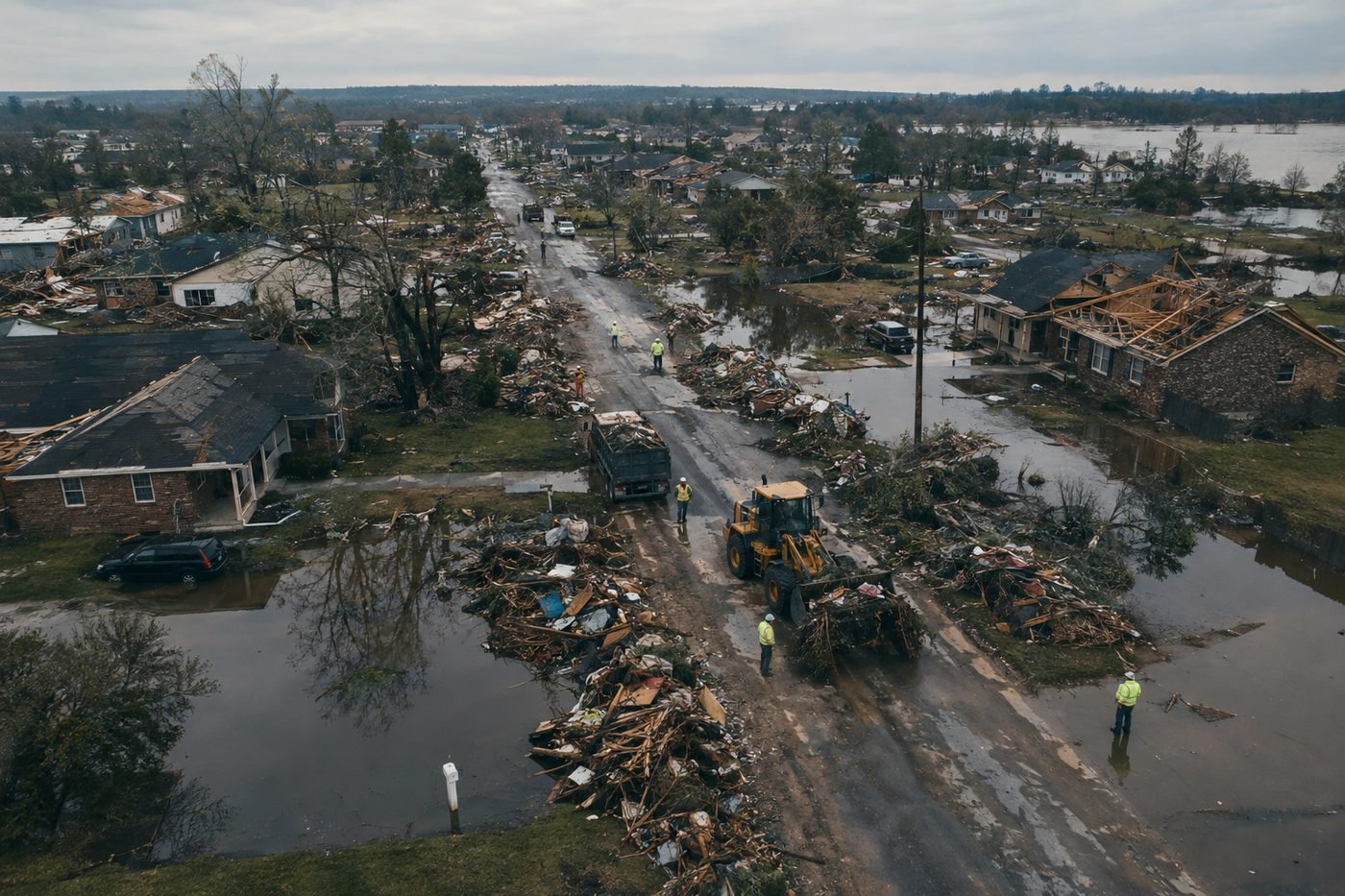
The 30 days run from the date FEMA designates your area for Public Assistance, not from the incident and not from the announcement of the declaration, although the dates often coincide. When counties are added later by amendment, the newly designated areas get their own 30-day window from the amendment date.
The Public Assistance Program and Policy Guide provides that FEMA may extend the deadline for extenuating circumstances beyond the applicant’s control, and gives examples: the applicant is claiming only categories of work that were not authorized when its area was first designated; the delay was caused by FEMA; Grants Portal was unavailable on the deadline day; or communications were down long enough that applicants in the area could not send or receive information. A heavy response workload is not among the examples listed. Filing early preserves every option. The guide allows an applicant to withdraw an RPA later, while a request filed after the deadline is evaluated against the extenuating-circumstances standard and is not assured of approval.
What happens after you file
The sequence set out in the policy guide is consistent from one declaration to the next, which is an advantage if you prepare for it.
- Applicant Briefing. The recipient explains the declaration, the categories of work authorized, the cost share and the deadlines. Send the people who will actually manage the grant, not only the people who attend meetings.
- Exploratory Call. Your Program Delivery Manager introduces the process, asks about your impacts and priorities, and tells you what to bring to the scoping meeting.
- Recovery Scoping Meeting. Damage is discussed site by site, projects begin to take shape and documentation expectations are set. This meeting starts the 60-day clock.
- Impact identification, 60 days. For each impact the policy guide asks for the facility name and type, its location, a description of the damage or the emergency work performed, an approximate cost, the work status, the date the facility was built and your priority. The policy guide provides that impacts reported after day 60 may be considered only with a time extension based on extenuating circumstances beyond the applicant’s control, requested through the recipient.
A first-30-days checklist
- Name an Applicant Agent and an alternate, and register both in Grants Portal.
- Pull the labor, overtime, equipment and procurement policies that were in force on the first day of the incident period. Under the policy guide, FEMA evaluates labor costs against the written policy in effect before the incident period, not one adopted after it.
- Open a disaster-specific cost code or fund so labor, equipment, materials and contracts can be reported by event and by site.
- Photograph damage before you repair it, with the date and location. Keep one running site list with GPS coordinates; it becomes your impact list.
- Notify insurers and file claims now. The Stafford Act and FEMA policy require eligible costs to be reduced by actual or anticipated insurance proceeds, so the insurance claim needs to move in parallel with the grant.
- Log emergency work as it happens: the threat, who ordered the work, which crews and equipment, at which site. Daily activity logs such as ICS 214s are the backbone of a force account labor claim.
- Record mutual aid received and provided, with the agreements behind it.
- Run emergency purchases under your written procurement procedures and document why competition had to wait. The procurement guide covers what that record needs to say.
- Calendar the 6-month and 18-month completion deadlines and request any extension through the recipient before the deadline passes.
How McGee Disaster Consulting Group helps in the first month
Meeting the FEMA RPA deadline is the first task our team takes on for a new applicant. McGee Disaster Consulting Group brings together people who have sat on the applicant side of Recovery Scoping Meetings and people who have reviewed Grants Portal submissions for FEMA and for states. That shapes how we start: the impact list is treated as the blueprint for every project that follows, not as paperwork, and the policies FEMA relies on when it evaluates labor and procurement costs are reviewed before the first timesheet is submitted. If your area was just designated, PA Grant Management covers the RPA through obligation. If you are between events, Recovery-Ready Planning puts the policies, inventories and contracts in place before you need them.
This guide summarizes published FEMA policy and federal regulation as of its update date, principally the Public Assistance Program and Policy Guide, Version 5.0, and Titles 44 and 2 of the Code of Federal Regulations. Eligibility, deadline and funding determinations are made by FEMA and the recipient on the facts of each project. Nothing here is legal advice, a prediction of how a request will be decided, or a commitment on FEMA’s behalf. McGee Disaster Consulting Group manages the process and the record; the determinations remain FEMA’s.
Primary sources
- FEMA, Public Assistance Program and Policy Guide, Version 5.0 (effective January 6, 2025), Chapter 4, Request for Public Assistance, and Chapter 5, Identifying Impacts.
- 44 CFR 206.202, Application procedures, and 44 CFR 206.204, Project performance (deadlines).
- FEMA, Process of Public Assistance Grants.
- FEMA Grants Portal.