


Staff Training

Staff training prepares the people who create the record: finance, public works, procurement, and emergency management staff. It gives each role a shared understanding of the documentation it produces and why that documentation is reviewed.

Topics include force account labor and equipment, materials and supplies, procurement files, damage and debris documentation, direct and management costs (Category Z), and the filing structure that keeps every record retrievable through closeout.

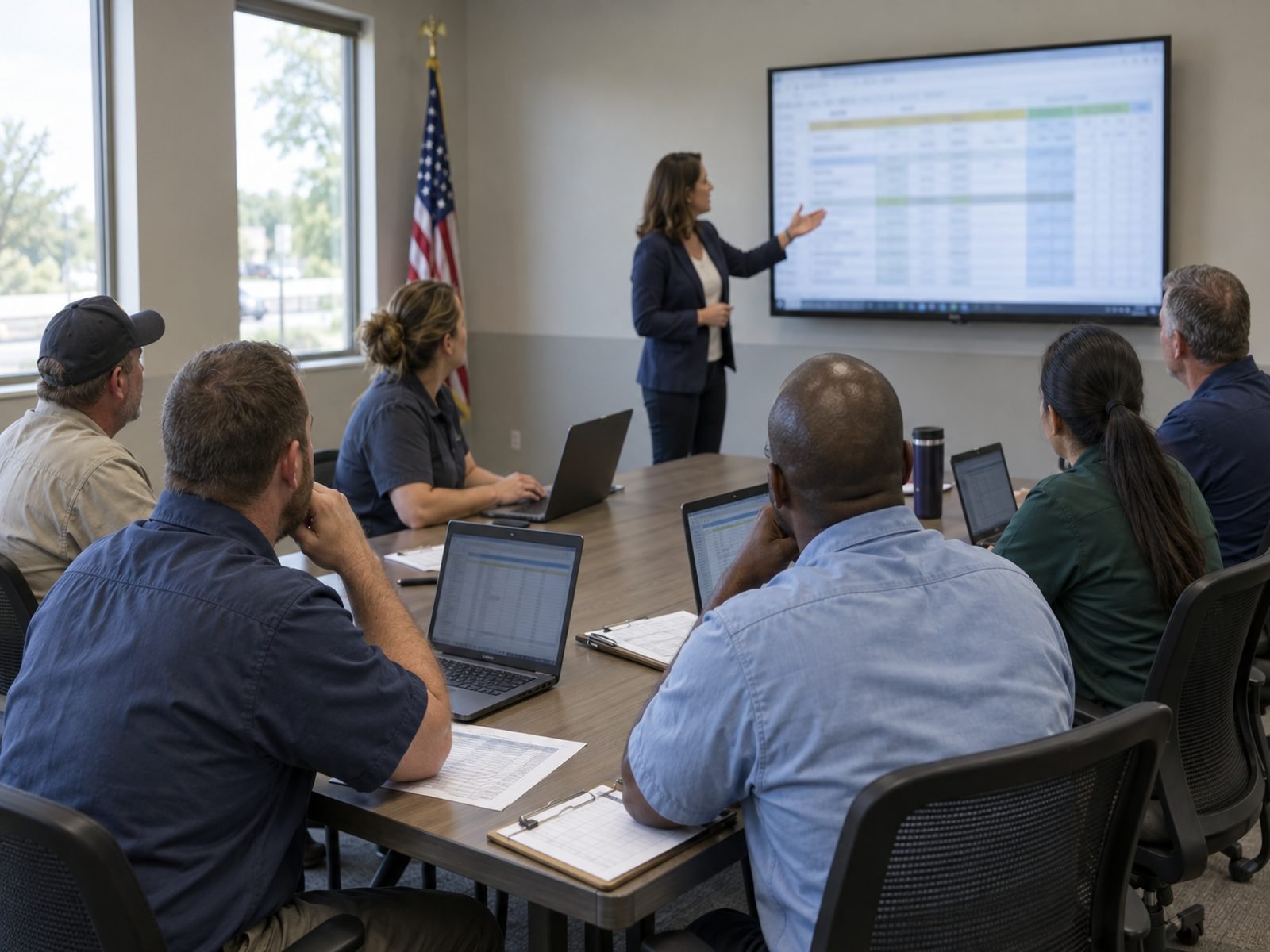
Finance and public works staff in a training session at a county meeting room, timesheets and equipment logs on the table

Why It Matters.

Across nine fiscal years of disaster grant audits, the DHS Office of Inspector General recommended that FEMA disallow $3.92 billion, 27 percent of the $14.31 billion in Public Assistance and Hazard Mitigation funding it examined (OIG-18-33). In its summary of the 2011 audits the OIG wrote that unsupported costs usually occurred because subgrantees did not adequately record their own labor and equipment hours or did not obtain support for hours worked by contractors (OIG-12-74).

McGee Disaster Consulting Group trains the staff who record labor and equipment, maintain supporting documents, process purchases, and file project records.

Three findings the OIG identified

Unsupported costs

Federal cost principles (2 CFR 200.403(g)) require recipients and subrecipients to adequately document costs that they claim under Federal programs. In one audit the support for labor did not identify the names of the employees who performed the disaster-related work, when they completed the work, or the number of hours they worked (OIG Audit Tips, OIG-16-109-D).

The training covers daily timesheets and equipment logs that capture those details.

Contracting practices

Organizations must maintain records sufficient to detail the history of the procurement, including rationale for the method of procurement, selection of contract type, contractor selection or rejection, and the basis for the contract price (2 CFR 200.318(i)).

The training covers the procurement file from the first quote through award.

Project accounting

The OIG advises that each expenditure is recorded in the accounting books and is referenced to supporting source documentation (checks, invoices, etc.) that can be readily retrieved (OIG-16-109-D).

The training covers project coding, cost tracking, and linking supporting documents in the organization's own filing system.

What We Cover.

McGee Disaster Consulting Group trains with the organization's own forms, pay policy, and equipment list. Training is delivered in the format the organization prefers: in person, online, or as a tabletop exercise. Each session leaves the organization with its forms, checklists, and guides in a file it keeps.

A public works crew lead filling in a paper daily timesheet on a clipboard beside a municipal dump truck

Force Account Labor

Recording each employee's disaster hours by day, site, and task; separating regular time from overtime; and tying each timesheet to the payroll register and the pre-disaster pay policy.

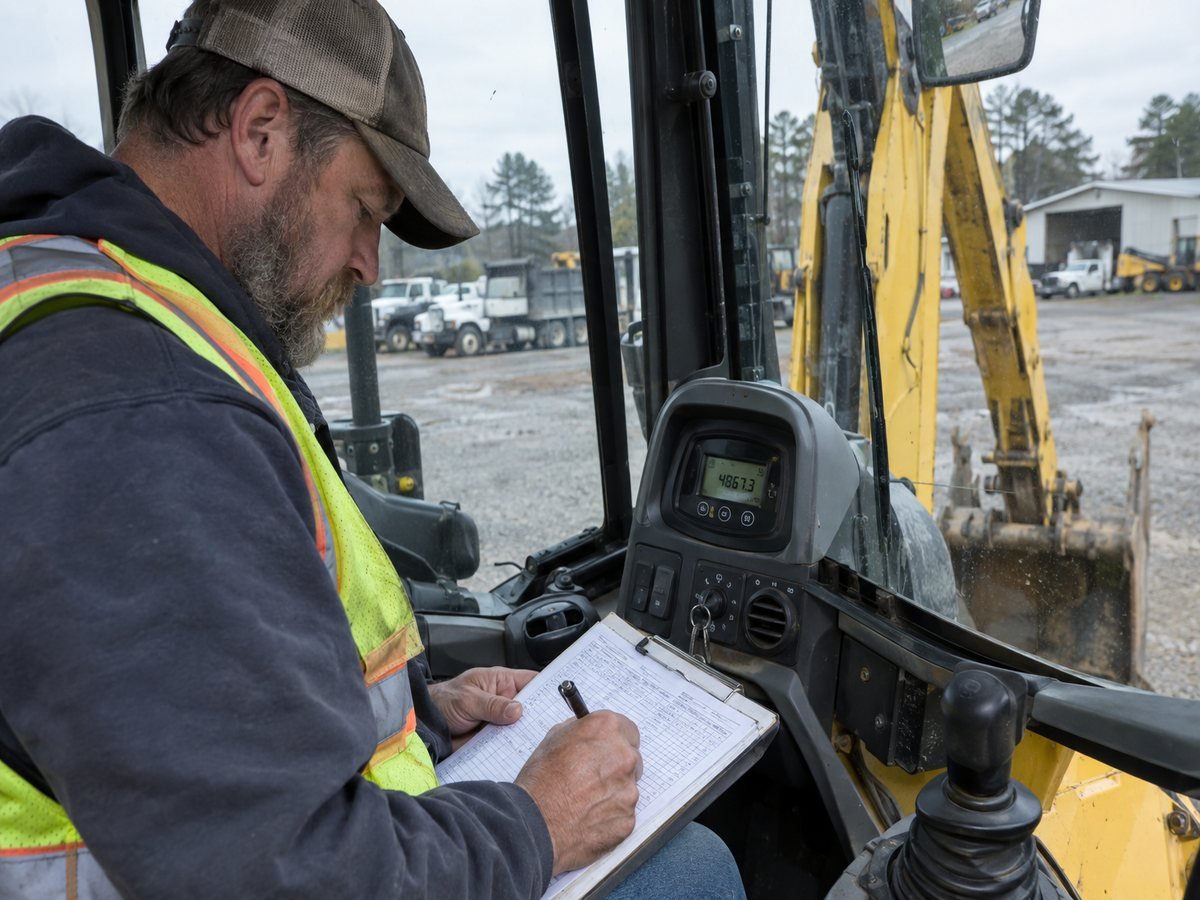
An equipment operator reading the hour meter in a backhoe cab and writing the hours into an equipment log

Force Account Equipment

Logging each unit by number, operator, hours used, and standby hours, and keeping the inventory and rate schedule the logs are matched against.

A municipal warehouse worker signing a withdrawal form while pallets of pipe and sandbags are moved

Materials and Supplies

Documenting stock withdrawals and purchases by project and site.

A procurement officer comparing three printed vendor quotes beside an open contract binder

Procurement and Contracts

Opening the procurement file with the first quote: method and rationale, cost or price analysis, contractor selection, required contract provisions, and contractor oversight.

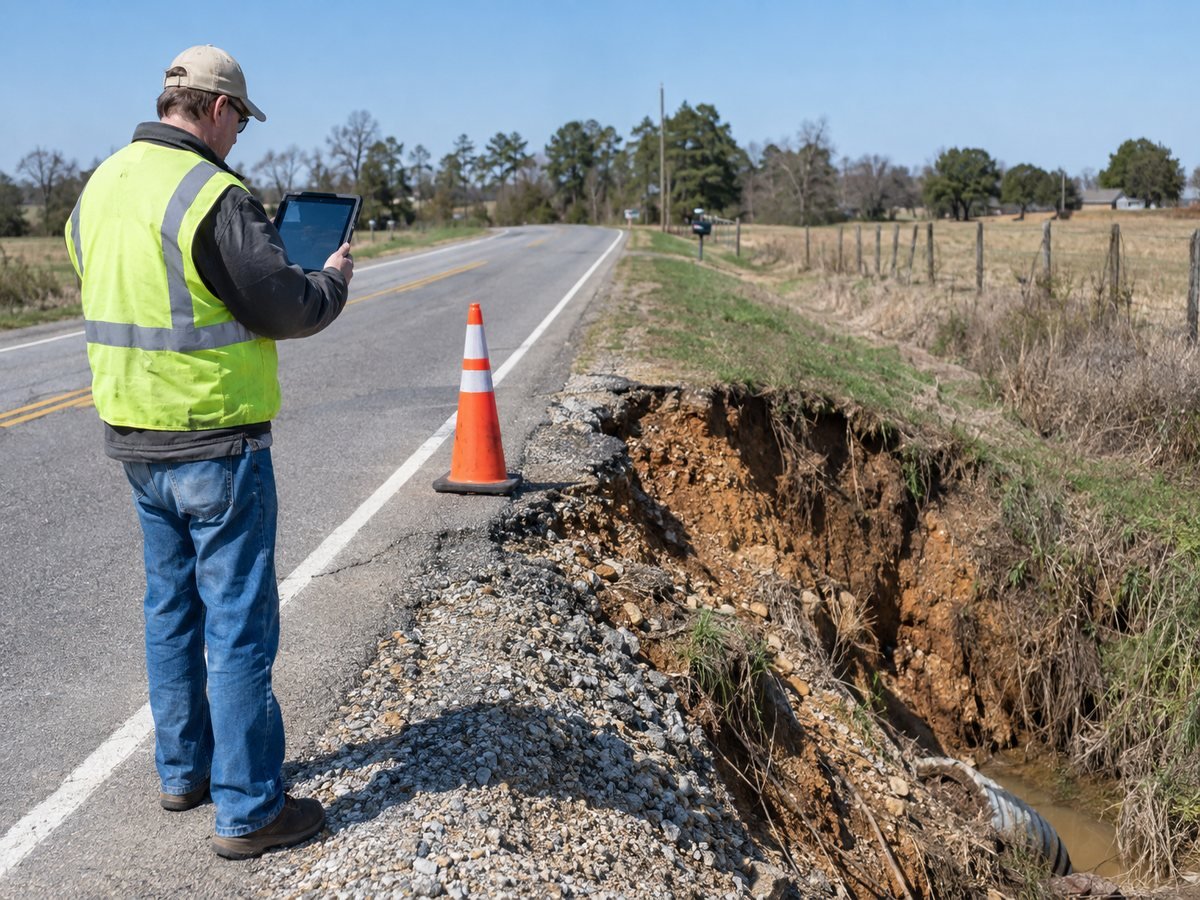
A county inspector photographing a washed-out road shoulder with a tablet, a traffic cone in the frame for scale

Damage and Debris Documentation

Photographing and locating damage before anything is moved, keeping a damage inventory by site, and managing debris load tickets, monitoring logs, and truck certifications.

A finance clerk scanning invoices and timesheets at a desk with two monitors showing a document folder structure

Filing and Retrieval

Project codes, file naming, and review and signature steps, so a document filed today can be found years after the award closes.

Direct Costs and Management Costs.

Every disaster hour claimed goes in one of two places: on the project it served, or in administration of the award. Public Assistance funds, documents, and closes the two differently. We train finance, payroll, and program staff to separate them on the day the hour is worked.

Incidents declared on or after October 5, 2018 follow the current management cost rules; for incidents declared August 1, 2017 to October 4, 2018, recipients and subrecipients had options (FP 104-11-2). Earlier declarations claim direct administrative costs on each project. The training covers both sets of rules for organizations with older open awards.

Direct project costs, Categories A through G

Force account labor, equipment, materials, and contract work that performs the repair, removes the debris, or carries out the emergency protective measure at a specific site. Each is charged to the project it served.

  • Crew hours on a debris route or a road repair
  • Equipment hours by unit, with the operator and the site
  • Materials drawn from stock or purchased for the project
  • Contractor invoices tied to a procurement file

The training covers coding these to the project on the day they happen, using the organization's own forms.

Management costs, Category Z

Hours spent administering the award, charged to the separate management cost project. The policy is summarized on Grant Management. Activities include:

  • Preliminary damage assessments and site inspections
  • Meetings about the program or the overall damage claim
  • Developing damage descriptions and preparing and reviewing projects
  • Collecting, copying, filing, and submitting documents, and requesting disbursement
  • Training

The training covers recording these hours under Category Z, apart from any repair or debris project.

One hour, one code

An employee who inspects damage in the morning and runs a chainsaw in the afternoon has worked on two different claims. The timesheet carries a code for each, entered the same day by the person who knows the split.

The training covers the activity code and where it is recorded.

The cost summary

For declarations on or after September 18, 2022, FEMA accepts a summary of force account labor and equipment for management costs (FEMA guidance). The underlying timesheets are still retained under 2 CFR 200.334.

The training covers building the summary from the timesheets, not in place of them.

Indirect costs

Indirect costs are charged through a negotiated indirect cost rate or, for organizations without one, the de minimis rate, and each cost is charged consistently as direct or indirect (2 CFR 200.414).

The training covers which rate the organization holds and how it is applied to the Category Z claim.

The claim deadline

A subrecipient may claim management costs incurred up to 180 days after it completes its last non-management project, or 180 days after that project's latest period of performance, whichever comes first, within two years of an emergency declaration or eight years of a major disaster declaration (FP 104-11-2).

The training covers tracking that date for each declaration alongside the project deadlines.

Related Public Assistance Guides.

Each guide quotes the policy or regulation word for word, links to the source, and gives our plain-language reading.

All Public Assistance guides
Schedule a Conversation
(844) 393-7284 Monday to Friday, 8 AM to 5 PM Central